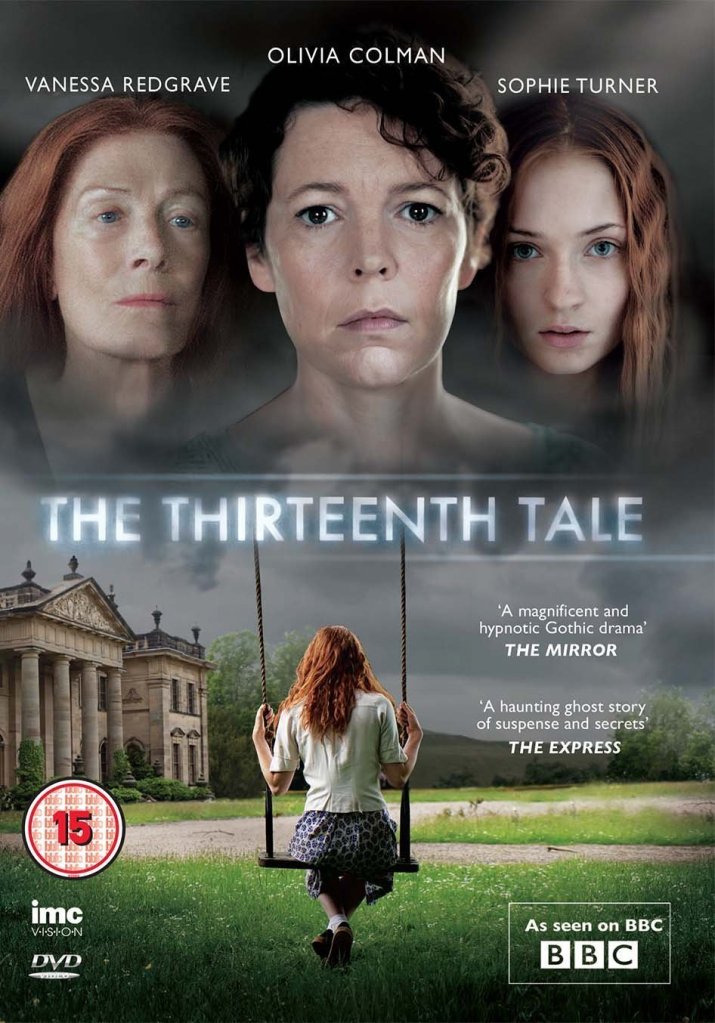
Title: The Thirteenth Tale
Starring: Olivia Coleman, Vanessa Redgrave, Sophie Turner
Director: James Kent
Original Release Date: 2013
Run Time: 90 Minutes
Film Rating: 15 (UK)
When I first read The Thirteenth Tale by Diane Setterfield at the end of 2025 I had no idea that a film adaptation had been made by the BBC back in 2013. Although I had mixed feeling about the book, I was very curious to see the film.
This gothic-esque haunted house story is split between the past and present day. In the present author Vida Winter (Vanessa Redgrave) invites Margaret Lea (Olivia Coleman) to write her biography. Margaret is reluctant due to Vida’s habit of obscuring her own history. Promising honestly, Vida tells her the story of the March twins and their life at Angelfield House. Raised by the servants, Adeline and Emmeline, grow up wild and uncontrollable. Enter governess Hester Barrow (Alexandra Roach) who, along with Dr Mawsley (Tom Goodman-Hill), decide to separate the twins to force them into normal functional individuals – only their actions have dangerous consequences.
One of my biggest issues with the book was its slow opening pace. I was pleased that the film jumped the story ahead slightly and began at Margaret and Vida’s first meeting rather than prior to their first correspondence. Despite cutting out part of the original opening, the beginning of the film was able to suitably lay the groundwork for the upcoming story. I also liked that, by quickly introducing the ticking clock element of Vida’s ill health, the film established an urgency to Margaret and Vida’s decisions and actions.
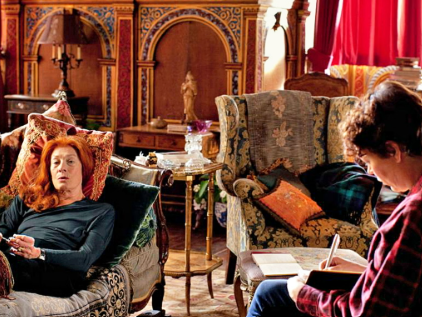
First, the present day storyline.
The pairing of Vanessa Redgrave and Olivia Coleman is undeniably excellent. Their scenes consist mainly of dialogue rather than action. Whether it is a battle of wills or supporting each other through the film’s more emotional moments the pair command the audience’s attention throughout and add a layer of humanity to the story.
One big change the film made was to have Margaret witness her own twin’s death when they were young teens. In the book her sister dies as a baby and, despite Margaret having no memory of her, sinks into madness for a time. In the adaptation we see flashbacks of that fateful day – making Margaret’s emotions and guilt feel present and raw. I believe that making Margaret haunted by the past rather than delirious was a big improvement from the book as it better mirrored Margaret and Vida’s complex feelings towards their sisters.
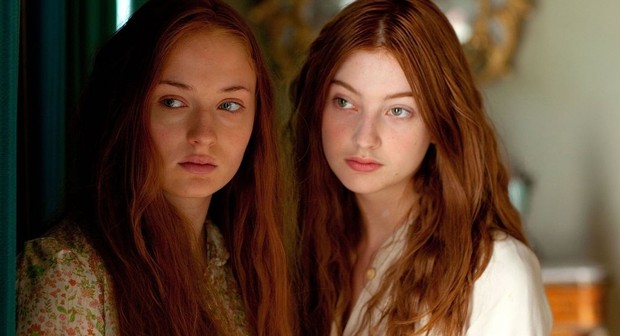
Now the past storyline.
As with the book, the past timeline was my favourite of the two simply because there was more mystery and more to explore. Madeline Power who plays both Adeline and Emmeline as children and Sophie Turner and Antonia Clarke who play the sisters as older teenagers/young adults all do a brilliant job at conveying the unpredictable nature of the characters and their performances help to sell the creepy and unsettling nature that fills the past storyline; especially considering the young age of the three actresses in 2013.
The past scenes feature a large number of characters, all with interwoven relationships between them. To aid viewers The Thirteenth Tale uses voiceover narration. While relying on a narrator to tell the story can be a risky choice, in this case Redgrave’s voiceover actually fits very well with this style of story which is essentially Vida recounting events to Margaret. It might be a simple way of conveying information to the audience but it works well.
My favourite part of The Thirteenth Tale was the visual comparison of Angelfield House across the two time periods. We are shown the same rooms both in their past grandeur and their present day dilapidation. I noticed the rooms were shown from the same angles in both timelines to further highlight the withering changes and decay; with the condition of the house used as a metaphor for the mental state of the people living inside it.
The Thirteenth Tale is 90 minutes long however I felt the film could easily have been increased to a full two hours. As an adaptation, the film does manage to portray many key moments from the book however I found that a lot of the expanded details were missing. For example while exploring Angelfield House Margaret meets a man called Aurelius Love. In the film their interaction lasts for only a single scene but the book shows a friendship that develops between the pair across several encounters. Packing a 400+ page story into a 90 minute run time also meant that some of The Thirteenth Tale’s smaller mysteries had to be sacrificed in order to make space for its more dramatic revelations. One such mystery was what happened to Hester who disappeared from Angelfield House in the middle of the night. The film tells us straightaway what happened whereas the book teases the answer out until the closing chapters. For moments like these I wish the film had been given the time to delve even deeper into this interesting group of characters.
As a film adaption The Thirteenth Tale is a solid effort that captures the essence of the original story as well as successfully recreating many important moments from the book. I really enjoyed watching scenes I’d previously read be brought to life. While there were some moments and characters I wish had been expanded upon the film was still a great watch.
Related Posts:
If you enjoyed this review you may also like these reviews: