
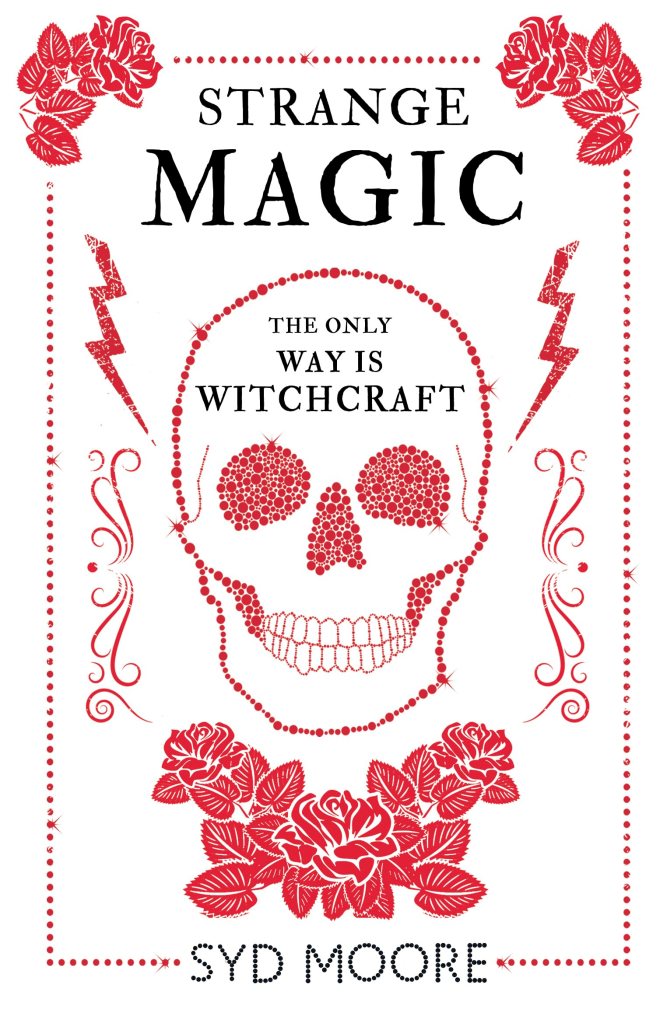
Title: Strange Magic
Author: Syd Moore
Publisher: Point Blank
Publication Date: 2017
Strange Magic is the first book in the Essex Witch Museum Mysteries series by Syd Moore.
The story follows Rosie Strange who has inherited the Essex Witch Museum from her grandfather; now deceased. Rosie plans to sell the museum to developers as soon as possible. On the day Rosie arrives to take ownership of the museum it is visited by the eccentric Dr George Chin who wants curator Sam Stone’s help to locate the skeleton of Ursula Cadance who was executed for witchcraft 400 years ago. The spirit of Ursula’s son is possessing a young boy and only the bones of his mother can break the hold. There’s also a monetary reward for the museum if they succeed…only tracking down Ursula’s remains proves harder than Rosie or Sam first though.
I love that Moore brought in a historical element to her story and wove fact and fiction together. In her author’s note she explains that she was inspired by the real Essex Witch Trials and the case of Ursula Kemp who was found guilty of witchcraft and used this to guide the fiction parts of her story. It is clear from reading the novel that Moore put a lot of research into this book and her enjoyment and fascination for the subject comes through.
As far as the plot goes, Strange Magic has all the right ingredients for a good spooky tale. It has witches and the occult, skeletons and spirits, and plenty of unexplained phenomena. Where the book struggles is its characterisation and the attitudes it expresses towards women.

When a male character is introduced the description focuses on facial features, their expression, and their clothing but female characters are typically introduced with a comment about the quality of their legs or chest. In a similar contrast Rosie, through internal narration, positively describes the physical attributes of male characters but negatively highlights the body shape and features of female characters. This mix of scrutiny, judgement and mockery made for an uncomfortable reading experience.
Another example of negativity towards women came from the patronising behaviour from nearly every male character towards Rosie – either for being a woman, for originally being from Essex, or for not knowing about the complete history of witchcraft.
Strange Magic sets up a slow burn enemies to lovers arc between Rosie and Sam. The enemies part of their relationship is set up very well but I was disappointed that Rosie, despite calling out and being repulsed by Sam’s patronising ways, became physically attracted to him which made her forgive his many personality flaws. Sadly I didn’t feel the chemistry between the two characters was believable and neither changed enough over the course of the novel for me to root for them as a partnership.
It’s safe to say that Strange Magic is not the book for me nor will I be continuing with the series. The story had a great premise and a lot of real life inspirations to keep it interesting but unfortunately the book’s characters let it down.
Related Posts:
If you enjoyed this review you may also like these reviews:

 Lair of Reviews
I’ve been looking for a new mystery series, what drew you to the Essex Witch Museum Mysteries? 📚
LikeLike
This book actually came in a Halloween-themed book box I bought. I liked the concept of a modern day couple investigating occult-themed mysteries. Sadly I didn’t end up enjoying ‘Strange Magic’ but I know there are a lot of books in the series, each one with a different topic, so different books might appeal to different people.
LikeLike