
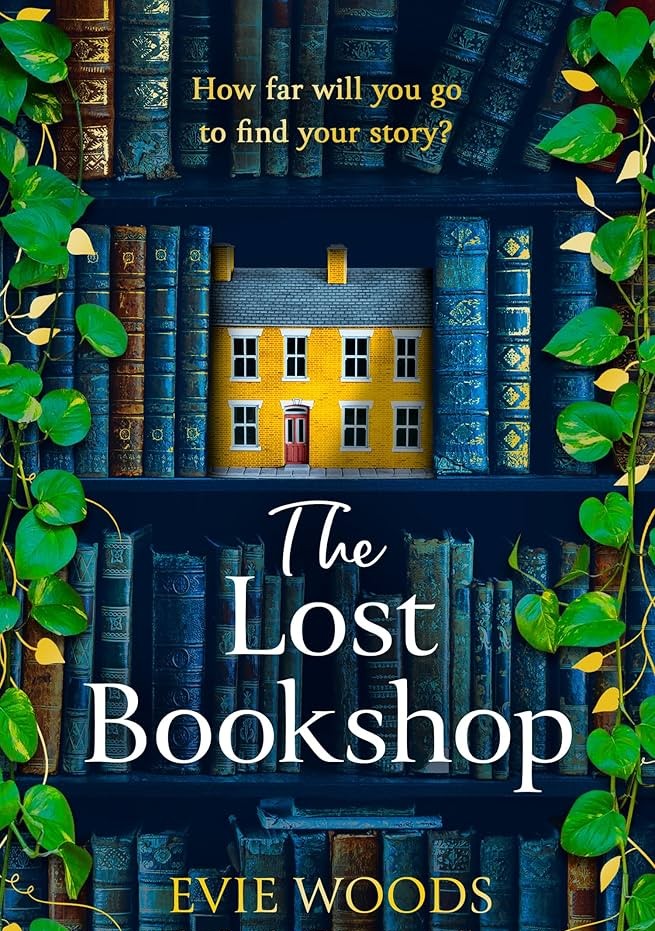
Title: The Lost Bookshop
Author: Evie Woods
Publisher: One More Chapter
Publication Date: 2023
The Lost Bookshop is the best-selling novel by author Evie Woods (aka Evie Gaughan).
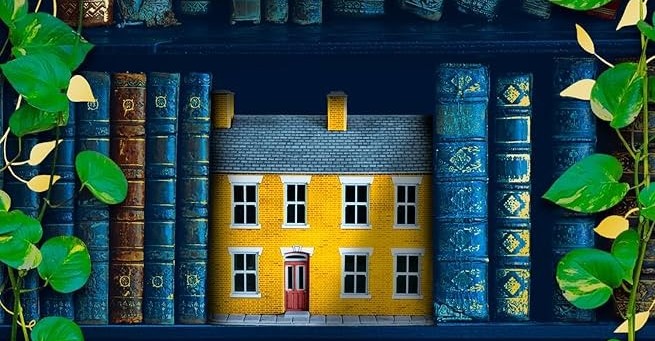
I didn’t know anything about the story before I began reading but the book’s blurb intrigued me. It promised “a vanishing bookshop”, “a world of wonder” and plenty of secrets and mysteries as three strangers “discover that their own stories are every bit as extraordinary as the ones found in the pages of their beloved books”. This description, combined with the novel’s magical bookshelf themed front cover, convinced me to give it a try.
The Lost Bookshop follows three main characters:
In the 1920s, Opaline flees from an arranged marriage and her controlling brother for an independent life of her own. After becoming a rare book dealer in Paris, Opaline ends up in Dublin where she decides to make a bookshop her home.
In the present day Irish-born Martha has just escaped from her violent and abusive husband. Wanting/needing a fresh start she gains employment as a housekeeper for the eccentric Madame Bowden – only to realise that there is more to her employer’s old house than she first thought.
Also in the present day is Henry. Needing to produce results in order to secure further academic funding, Henry is on a mission to find the rumoured second novel by Emily Bronte and the bookshop he visited in his youth before it disappeared in front of his eyes. After a chance encounter with Martha the pair seek to unravel the bookshop’s and Opaline’s history.
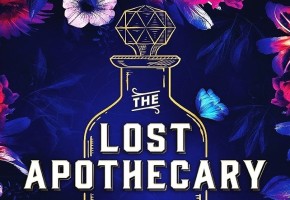
Straightaway The Lost Bookshop reminded me of Sarah Penner’s 2021 novel: The Lost Apothecary. The two books share a lot of parallels. Both feature three narrators split across two time periods with the present day character/s investigating what happened to their historical counterpart and the business they ran; which has subsequently disappeared from view. Both novels also feature strong-minded independent female characters who are escaping from trauma caused by abusive male partners. In both cases I preferred the chapters of the past character as they battled against an unforgiving society rather than tracing their journey through the investigations of the present day characters.
Because I had not done any research on this novel before picking it up, I was unprepared when the novel shifted into the magical realism sub-genre of fantasy. Unfortunately for me, this happens to one of my least favourite genres. In magical realism fantastical elements are woven into reality and are accepted as part of the real world. This acceptance and lack of curiosity, and therefore lack of explanation, is what frustrates me. A couple of examples from The Lost Bookshop are a bedroom that slowly turns into a tree and a tattoo that appears on a person’s back overnight – neither of which cause any concern for our characters. They just accept it and move on. My dislike of the sub-genre is purely personal preference but this lack of answers and deeper examination of the magical elements did, for me, let down what was overall a good book.
The Lost Bookshop has a lot of good points. It has three protagonists and therefore three narratives that kept me engaged. Woods mixes historical people and events with her fictional characters in a way that felt natural. Despite its length, the short chapters actually made this book quite a quick read. Sadly the move into magical realism (and the focus on classical literature in the second half of the book) meant that this was not the novel for me.
Related Posts:
If you enjoyed this review you may also like these reviews:
 Lair of Reviews